
Imagine you want to buy a used Honda Accord. You don’t want to haggle. You don’t want to post it online. You especially don’t want to meet a seller named Randy behind a Tim Hortons to test-drive a car that smells faintly of despair.
You just want the car. Now.
Unfortunately, nobody is standing in your driveway yelling, “Hey! I have the exact Honda Accord you want.” You have money, someone else has the car, but the odds you both show up at the same time with the same price are basically zero.
So, into this mess steps the market maker. She says, “I’ll buy the Accord from whoever wants to sell, and sell it to whoever wants to buy, for a small fee.”
She doesn’t particularly care about Honda Accords. She just cares that other people do. In theory, the market maker’s goal is to have no opinion about the car. She’s not betting on whether the price will rise or fall.
She’s betting on flow: for every person who wants to buy, there’s another who wants to sell.
The Spread: Where the Magic Happens
Our market maker posts two prices. She’ll buy your Accord for $9,995, and sell it for $10,005.
That tiny $10 difference is called the spread, and it’s how she makes money.
She’s not trying to get rich off one trade; she’s trying to get rich off a million trades where nothing bad happens. If she’s lucky, she owns the Accord for seconds before someone else wants it. If she’s unlucky, she owns 1,000 Accords just as gas prices spike and everyone decides they only drive Teslas now.
To you, it looks like there’s a constant, infinite supply of Accords available for purchase and sale. You can click a button and get one instantly. That illusion of liquidity (that there’s always a car, always a price, always a market) exists because someone like our market maker is willing to take that risk for a tiny fee.
What Happens When the Lot Burns Down
When markets are calm, it feels like magic — instant prices, instant trades. But when panic hits and everyone rushes to sell their Accord now, the market maker quietly disappears. If you want $10,000 for your car and buyers only offer $5,000, the math stops working. The spread widens, profit turns to risk, and the market maker steps aside.
That’s when markets realize the “liquidity” you thought you had was just one very tired market maker saying “sure” all day.
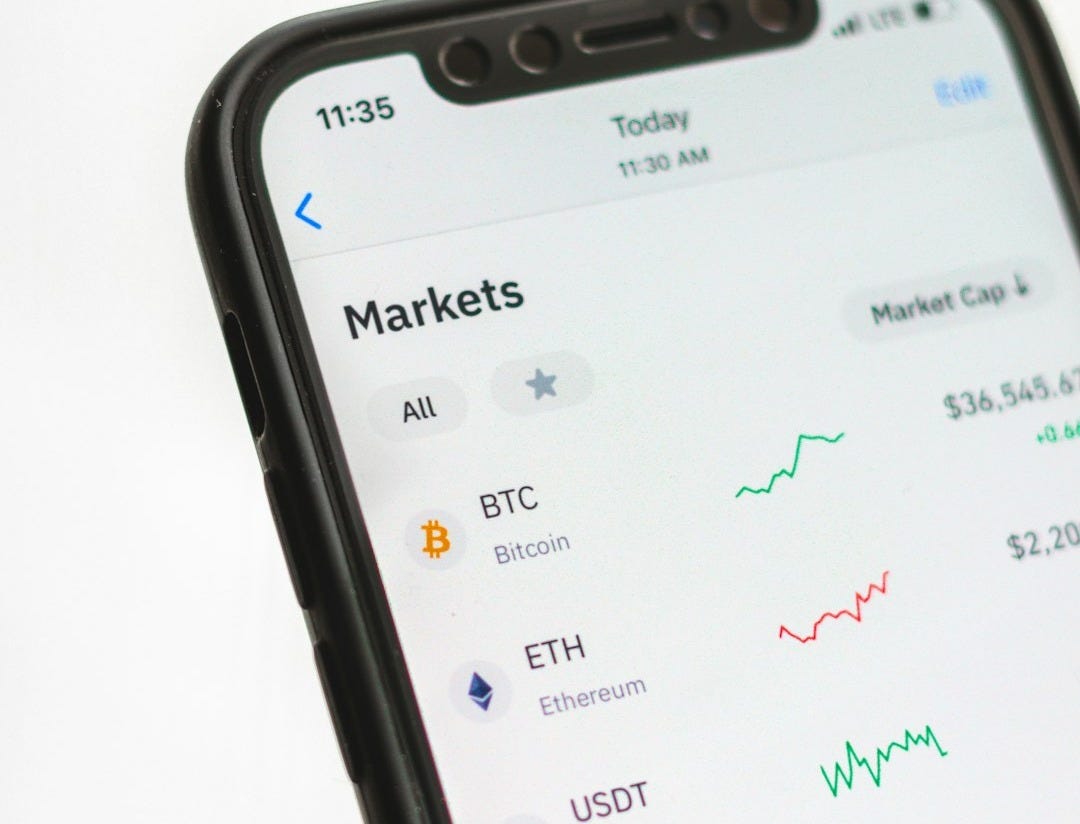
On October 10th, That Happened
Binance, the world’s biggest crypto exchange, lets people use stablecoins like USDe as collateral to trade with margin. $5,000 of collateral might get you $10,000 of margin. Normally, this is fine. Binance charges interest, everyone’s happy, and the occasional default gets smoothed out across thousands of profitable customers.
Until it doesn’t.
Usually, lenders use independent oracles: data feeds that tell you what something is worth across multiple markets. It’s like checking the Blue Book for the Honda Accord, instead of assuming that whatever Randy is charging must be correct. Market makers use this oracle to ensure they are pricing their thing correctly.
But Binance didn’t do that. Binance used its own order book as the oracle, meaning it valued collateral based only on prices inside its own parking lot.
The Exploit
A few weeks ago, Binance announced it would soon switch to independent oracles. But it hadn’t yet. Someone noticed.
That someone, on October 10, 2025, dumped upwards of $90 million worth of USDe on Binance, driving USDe’s price from $1.00 to $0.65 on Binance only. Everywhere else, it was still $1.
Inside Binance’s system, this looked catastrophic. Everyone who had borrowed money using USDe as collateral was suddenly underwater. The platform’s auto-liquidation engines kicked in, dumping their holdings—Bitcoin, Ethereum, everything—to cover the losses. A mass margin call.
That selling pressure spread across exchanges, crushing crypto prices globally. It looked, algorithmically at least, like everyone was selling.
Market makers suddenly found themselves long on one exchange, short on another, and wrong everywhere. They pulled out. Liquidity evaporated.
Meanwhile, someone had placed massive short positions on Bitcoin and Ethereum right before the crash, reportedly netting around $192 million in profit.
The Lesson
This was an exploit, yes. But it was also a reminder that markets don’t make themselves.
Liquidity is a feature of human confidence. It exists because someone stands in the middle, taking risk, believing that tomorrow will look roughly like today.
When that belief cracks, when the prices stop making sense, or when the lot starts burning, the market maker stops answering the phone.
And suddenly, Randy’s $10,000 Honda Accord isn’t a “liquid asset” anymore. It’s just a car in his driveway, waiting for you to call him back.